Following the fantastic success of our Scientist of the Term initiative in Term 1, we are delighted that it is back for Term 2!
Term 2: Mary Anning
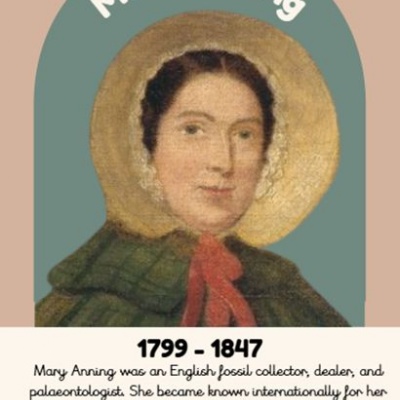
Our Scientist of the Term for Term 2 in Year 3 is Mary Anning!
Mary Anning was a famous fossil hunter who lived over 200 years ago in a seaside town called Lyme Regis, in Dorset, England. She loved exploring the cliffs and beaches, searching for fossils hidden in the rocks. Fossils are the preserved remains or traces of living things from a very long time ago.
Mary made some incredible discoveries that helped scientists understand more about prehistoric animals and life on Earth millions of years ago. When she was just a child, she began searching for fossils with her family. Despite facing many challenges, she became one of the most important fossil hunters in history.
One of Mary's most famous discoveries was a complete skeleton of an ichthyosaur, a prehistoric sea reptile, which she found with her brother when she was still young. Later, she discovered the first complete plesiosaur skeleton to be scientifically described. These amazing finds helped scientists learn about creatures that lived long before humans existed!
Mary Anning's discoveries changed the way people understood fossils and prehistoric life. Her careful observations, curiosity and determination helped scientists uncover secrets about the past. Today, she is remembered as a pioneering fossil hunter whose work made an important contribution to science.
Your Challenge!
We would like our Year 3 children to find out more about Mary Anning and create a piece of work that demonstrates their knowledge and understanding of her life and amazing discoveries.
Your work could include:
-
Interesting facts about Mary Anning.
-
Information about her life and where she lived.
-
An explanation of what fossils are and how they are formed.
-
Pictures and information about the ichthyosaur and plesiosaur.
-
A timeline of important events in her life.
-
Drawings of fossils or prehistoric sea creatures.
-
An explanation of why fossils help scientists learn about the past.
-
A poster, fact file, presentation or another creative format.
-
Anything else that demonstrates your scientific understanding!
Remember to make your work creative, informative and scientifically accurate. We can't wait to see your fantastic ideas and discoveries!
Important Date
Please hand your completed work to your class teacher by Fri 4th December (Panto Friday)
All entries will then be passed to our Science Lead, Mrs Crowe-White, who will choose the piece of work that demonstrates the most impressive learning, creativity and enthusiasm for science.
🏆 The winning child will receive a certificate and a prize, which will be presented during our celebration assembly in the final week of the term.
We can't wait to see what our budding scientists discover about Mary Anning and the fascinating world of fossils! Good luck, Year 3 — and happy fossil hunting! 🦴🔎