

Skip to content ↓
Upton Junior School

Upton Junior School

One Childhood - One Chance

Maths

Mathematics at Upton Junior School 

Intent and Aims: 

At Upton Junior School, we believe that mathematics is an essential part of everyday life and a key foundation for future learning and employment. Our mathematics curriculum follows the National Curriculum and aims to develop confident, curious and resilient mathematicians who can reason logically, solve problems and apply their mathematical knowledge to real-life situations. 

Through our partnership with Ark Mastery Maths, our teaching is designed to develop three key principles: 

  • Deep conceptual understanding – pupils develop a secure understanding of mathematical ideas and the connections between them. 

  • Precise mathematical language – pupils learn to communicate their mathematical thinking clearly and confidently using accurate vocabulary. 

  • Mathematical thinking and problem-solving – pupils develop resilience, independence and the ability to approach problems logically and creatively. 
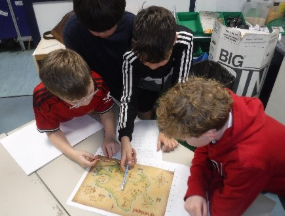
We place a strong emphasis on understanding why mathematics works, rather than simply learning procedures. Pupils are encouraged to make connections, explain their reasoning, learn from mistakes and apply their knowledge in unfamiliar situations. 

We want every child to leave Upton Junior School with the knowledge, skills and confidence to tackle mathematical challenges, both in the classroom and in the wider world. We aim to create a culture where mathematics is enjoyed, explored and discussed. Children will develop fluency, mathematical language and the confidence to reason and solve problems independently, recognising the relevance of mathematics in everyday life and their future.  

How we do this?  

Our mathematics curriculum is carefully sequenced, building on prior learning and revisiting key concepts throughout the year. Each school year begins by securing key foundations such as place value and the four operations, before knowledge and skills are progressively developed, applied and consolidated. 

Lessons follow a Concrete–Pictorial–Abstract approach, supported by practical resources, manipulatives, appropriate scaffolds and challenge. Teachers use a clear I do, We do, You do modelling approach, alongside purposeful questioning and formative assessment to identify misconceptions and adapt teaching in response to pupils’ needs. 

Our six-part lesson structure provides opportunities to develop mathematical language, talk through ideas, apply skills and deepen understanding. Daily Maths Meetings provide a focused 15-minute opportunity to rehearse and consolidate key concepts and build fluency. 

We continually develop our practice through collaboration, professional development, research and the sharing of effective practice, ensuring our mathematics teaching remains responsive and ambitious for all pupils. 

What’s the impact? 

Our pupils become fluent, confident and independent mathematicians who understand mathematical concepts and can apply them flexibly across different contexts. 

They can explain their thinking using precise mathematical language, reason effectively and solve problems independently, including in unfamiliar situations. Their fluency is underpinned by secure understanding and strengthened through reasoning and problem-solving. 

Maths Meetings  

Maths meetings are 15 minute sessions which are vital to our maths curriculum. Their purpose is to consolidate key areas of mathematics and develop fluency in recall of key knowledge. A Maths Meeting should cover several curricular areas, broken down into short segments. These curricular areas are chosen based on the class’s areas of development and consolidation needs.  

Supporting every mathematician  

We believe that every child can succeed in mathematics. Teaching is adapted to meet pupils’ individual needs, with carefully chosen scaffolds, manipulatives and visual representations used to support understanding. Pupils are also provided with opportunities to deepen and extend their thinking, ensuring that all children are appropriately challenged and supported to make progress. 

Problem Solving at Upton 

Problem Solving skills are interwoven throughout our curriculum to ensure children are familiar with a broad range of maths problems and challenges. In addition to this, we also teach the skills separately to build children’s confidence with problem solving so that they can apply this to other units of learning. Our 6 problem solving strands are: reasoning logically, working systematically, visualising, working backwards, trial and improvement and looking for patterns and conjecturing.  

How you can help your children at home? 


Regular practice at home helps children build confidence, fluency and recall. Secure times table knowledge is particularly important, as it supports learning across many areas of mathematics. 

We ask children to practise their times tables on TTRS three times a week and complete their weekly Mathletics task. Short, regular practice helps children to strengthen their skills and apply their knowledge confidently in lessons. 

Contact Us

Upton Junior School
Edge End Road
Broadstairs
Kent
CT10 2AH

(01843) 861393